
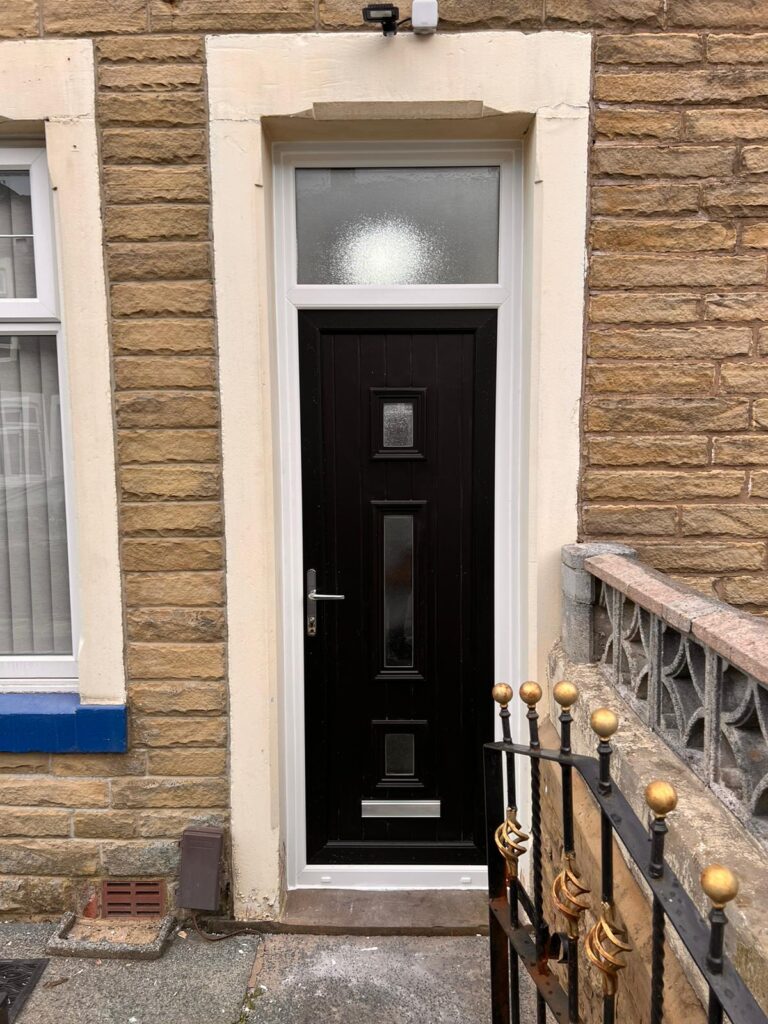
Your front door is the first line of defence for your home. Modern composite and uPVC doors can be very secure, but not every door is built to the same standard, and the lock fitted makes a big difference. If you are thinking about a new front or back door, here is what to look for.
Security standards explained
PAS 24
PAS 24 is a British security standard for doors and windows. Doors that meet it have been tested against common methods of forced entry, such as attacks on the lock, hinges and panels. Building regulations in England require new doors and windows in new homes to meet a security standard such as PAS 24, and it is a good benchmark to look for when replacing doors in an existing home.
Secured by Design
Secured by Design is a police-backed initiative. Products that carry the Secured by Design accreditation have been tested to recognised security standards and meet additional requirements. It is a useful sign that a door has been designed with security in mind.
The lock: multipoint locking
Most modern uPVC and composite doors use a multipoint locking system. When you lift the handle and turn the key, hooks, rollers and bolts engage at several points along the frame, not just in the middle. This makes the door much harder to force than a door with a single lock.
When looking at doors, check how many locking points there are and whether they include hooks and deadbolts, which are harder to prise apart than simple rollers.
The cylinder: protecting against lock snapping
The cylinder is the part of the lock where the key goes in. Many older uPVC doors were fitted with basic euro cylinders that can be snapped in seconds using simple tools, a method known as lock snapping. It has been a common way for burglars to get into homes with uPVC and composite doors.
Look for cylinders that are designed to resist snapping, drilling, picking and bumping. Two standards to look out for:
- TS007 3-star cylinders, or a 1-star cylinder combined with 2-star security handles.
- SS312 Diamond cylinders, tested by the Sold Secure organisation against a range of attack methods.
If you have an older door that is otherwise in good condition, upgrading the cylinder is one of the quickest and most cost-effective security improvements you can make.
Other features that matter
- Hinge protection. Hinge-side security pins or bolts stop the door being levered out from the hinge side.
- Strong frames and reinforcement. uPVC frames should have steel or other reinforcement inside. Composite doors usually have a solid core that resists impact.
- Laminated glass. Glazed panels in or next to a door should use laminated or toughened safety glass. Laminated glass holds together when broken, making it harder to get through. See our guide to toughened vs laminated glass.
- Letterbox security. A letterbox guard or a letter plate with an internal cowl helps stop tools being used through the letterbox to reach the handle.
- Door chains, viewers and smart locks. Useful extras, especially for checking who is at the door before opening it.
Composite or uPVC: which is more secure?
Both can be very secure if they are made to a recognised standard and fitted with a good lock and cylinder. Composite doors are usually thicker and heavier, with a solid core, while uPVC doors are lighter and often more affordable. Our comparison of composite and uPVC doors covers the differences in more detail. Whichever you choose, check the security specification rather than relying on the material alone.
Fitting matters as much as the door
A secure door can be undermined by a poor installation. The frame must be properly fixed into the opening, the door must be hung square so the locking points engage fully, and any gaps around the frame should be sealed. If a door has to be slammed or lifted to lock, the locking mechanism is under strain and the door may not be fully secure.
Simple habits that help
- Always lift the handle and lock with the key, even when you are at home. Simply closing a multipoint door without locking it leaves it on the latch only.
- Do not leave keys near the door or letterbox.
- Keep the area around the door well lit.
- Get any sticking or dropped doors adjusted, so the locks work properly.
Back doors and patio doors
Front doors get most of the attention, but back doors, French doors and patio doors are often less visible from the street, which can make them a more attractive target. The same principles apply: look for doors tested to a recognised security standard, a good multipoint locking system, anti-snap cylinders and laminated glass. Sliding patio doors should have anti-lift features so the door cannot be lifted out of its track, and French doors should have shoot bolts securing the slave door at the top and bottom.
Frequently asked questions
Can I upgrade the lock on my existing door?
Usually, yes. Replacing the cylinder with an anti-snap model, and the gearbox or locking mechanism if it is worn, can greatly improve security.
Does a new door affect my home insurance?
Some insurers ask about the type of locks fitted to external doors. Check your policy to see what is required.
How do I know if my cylinder is anti-snap?
Look for markings on the face of the cylinder, such as the British Standard kitemark with stars, or Sold Secure Diamond. If there are no markings, it is likely a basic cylinder.
New doors in Bolton and the North West
Luxe Windows supplies and fits composite doors, uPVC back doors, French doors and patio doors across Bolton, Bury, Salford and the North West. Call 01204 929995 or 07538 056353 for a free quote.