
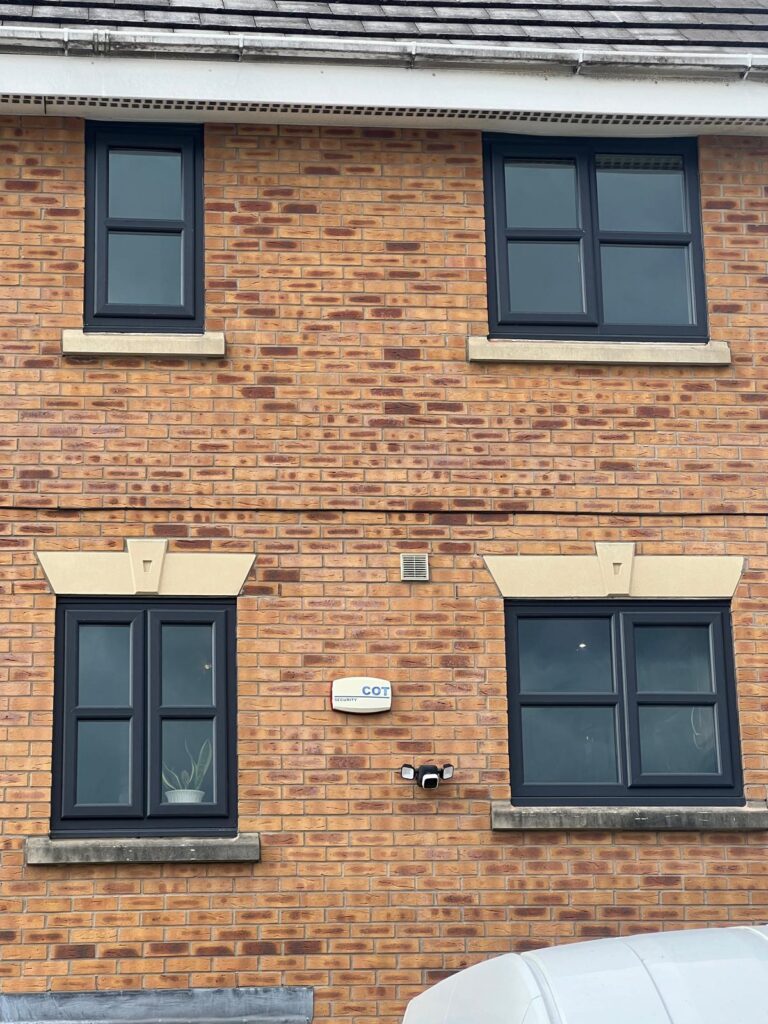
When you start looking at new windows, you quickly run into terms like U-value, Window Energy Rating, A++, low-E glass and warm edge spacers. They all relate to one thing: how well a window keeps heat in your home. With energy bills still a big concern for many households in Bolton and across Greater Manchester, it is worth understanding what the numbers mean before you choose.
What is a U-value?
A U-value measures how easily heat passes through a window. It is shown in watts per square metre per degree Kelvin (W/m²K). The key thing to remember is simple: the lower the U-value, the better the window is at keeping heat in.
Two U-values are often quoted:
- Centre-pane U-value is for the glass only, measured in the middle of the pane.
- Whole-window U-value includes the frame, the edges of the glass and the glass itself. This is the more useful figure, because frames and edges lose heat too.
When comparing quotes, always check that you are comparing whole-window figures.
What are Window Energy Ratings?
Window Energy Ratings (WER) give a single A++ to E style rating, similar to the labels on fridges and washing machines. The rating takes into account three things:
- How much heat is lost through the window (its U-value)
- How much free heat from the sun the glass lets in (solar gain)
- How much air leaks through the window (air leakage)
Because it considers solar gain as well as heat loss, the energy rating gives a fuller picture of how a window performs over a year. Higher ratings, such as A+ and A++, mean better overall performance.
What do the building regulations require?
In England, replacement windows in existing homes must meet minimum energy-efficiency standards under the building regulations. For replacement windows, the current standard is a whole-window U-value of 1.4 W/m²K or better, or an equivalent Window Energy Rating of band B or better. Most good-quality modern double glazing comfortably meets this. Installers registered with a competent person scheme, such as FENSA or Certass, can self-certify that the installation complies. Read more in our article on building regulations for replacement windows and doors.
What makes a window energy efficient?
Low-E glass
Low-emissivity glass has an invisible metal oxide coating that reflects heat back into the room while still letting light through. It is now standard in most quality double glazing.
Gas-filled cavities
The gap between the panes is usually filled with argon gas, which is a poorer conductor of heat than air, helping reduce heat loss.
Warm edge spacers
The spacer bar that separates the panes used to be made of aluminium, which conducts heat. Warm edge spacers made from less conductive materials reduce heat loss and condensation around the edges of the glass.
Multi-chambered frames
uPVC frames are made with internal chambers that trap air and reduce heat transfer. Better frames have more chambers and good-quality reinforcements.
Good seals and a quality installation
Even the best window will not perform well if it is badly fitted. Gaps around the frame, poor sealing and missing insulation in the reveals all let heat escape.
Is triple glazing worth it?
Triple glazing has a lower U-value than double glazing and can reduce outside noise. However, it is heavier and costs more, and for many homes the difference in energy savings compared with a high-quality A-rated double-glazed unit is modest. It can make sense for very exposed rooms, noisy locations or homes aiming for very high energy standards. A good installer will explain whether it is worthwhile for your property rather than simply upselling.
Will new windows lower my energy bills?
Replacing old single glazing, or early double glazing that has failed, with modern energy-efficient windows usually makes a home noticeably warmer and less draughty. How much it reduces your bills depends on your current windows, the size and type of your home, how you heat it and your energy prices. Be wary of anyone promising a specific saving without looking at your home.
Questions to ask when getting a quote
- What is the whole-window U-value, and what is the Window Energy Rating?
- Does the glass include low-E coating, argon fill and warm edge spacers?
- Will the installation be registered with FENSA or another competent person scheme?
- What guarantee comes with the windows and the installation?
Do not forget the doors
Windows get most of the attention, but external doors can lose a lot of heat too, especially older timber doors with single-glazed panels and worn seals. Modern composite and uPVC doors have insulated cores, double or triple-glazed panels and multiple seals, which make a noticeable difference in hallways and kitchens. Doors also have their own energy-efficiency requirements under the building regulations when they are replaced. If you are upgrading the windows, it is worth checking the condition of the doors at the same time.
Frequently asked questions
Is A++ always the best choice?
A++ windows perform very well overall, but A and A+ rated windows are also very efficient. The right choice depends on your budget and the orientation of your windows.
Can I improve my existing windows instead?
If the frames are in good condition, replacing failed or misted glass units with modern energy-efficient units can improve performance without replacing the whole window. See our guide to misted double glazing.
Do colours affect energy efficiency?
Frame colour has little effect on energy performance. Choose the colour you like, whether white, anthracite grey, black or a woodgrain finish.
Energy-efficient windows in Bolton and the North West
Luxe Windows supplies and fits uPVC windows and doors across Bolton, Bury, Wigan, Manchester and the wider North West. Call 01204 929995 for a free, no-obligation quote.